


Research groups
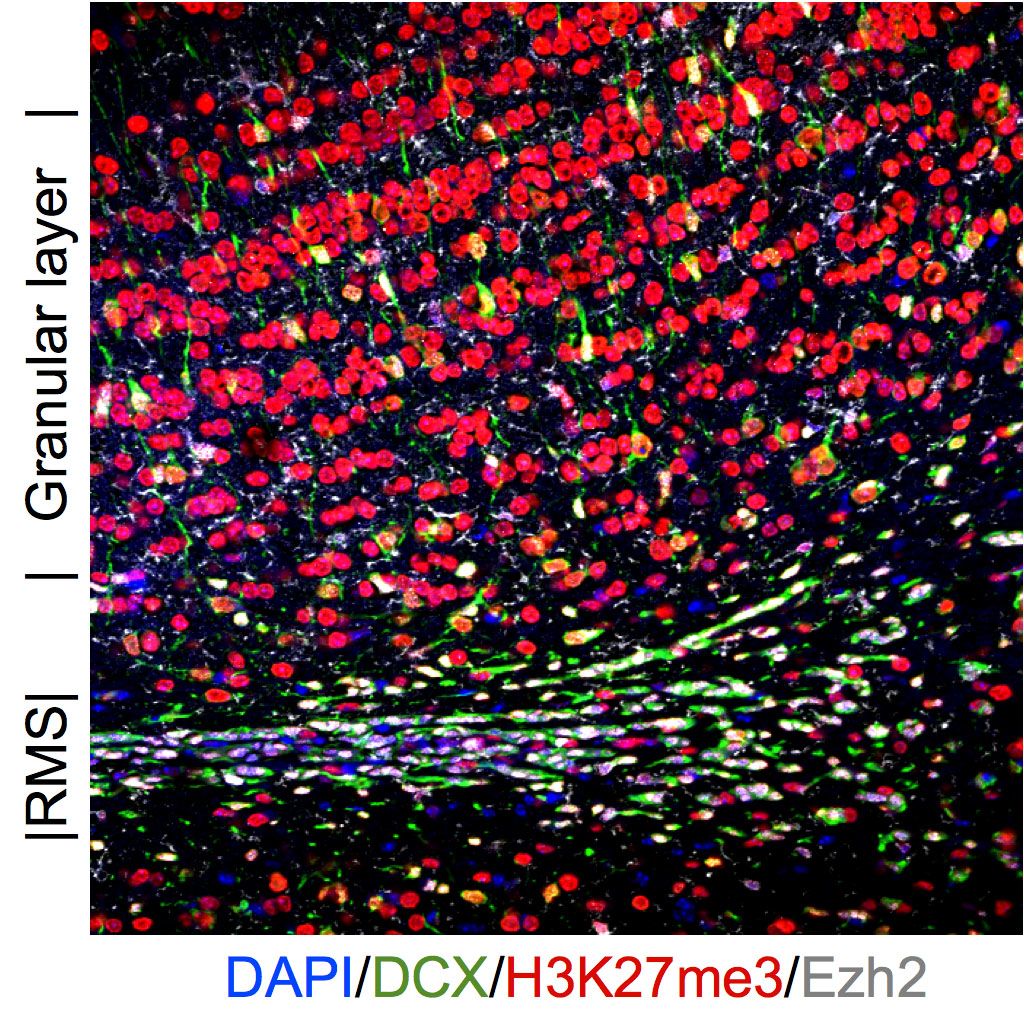
Epigenetic regulation of adult neurogenesis
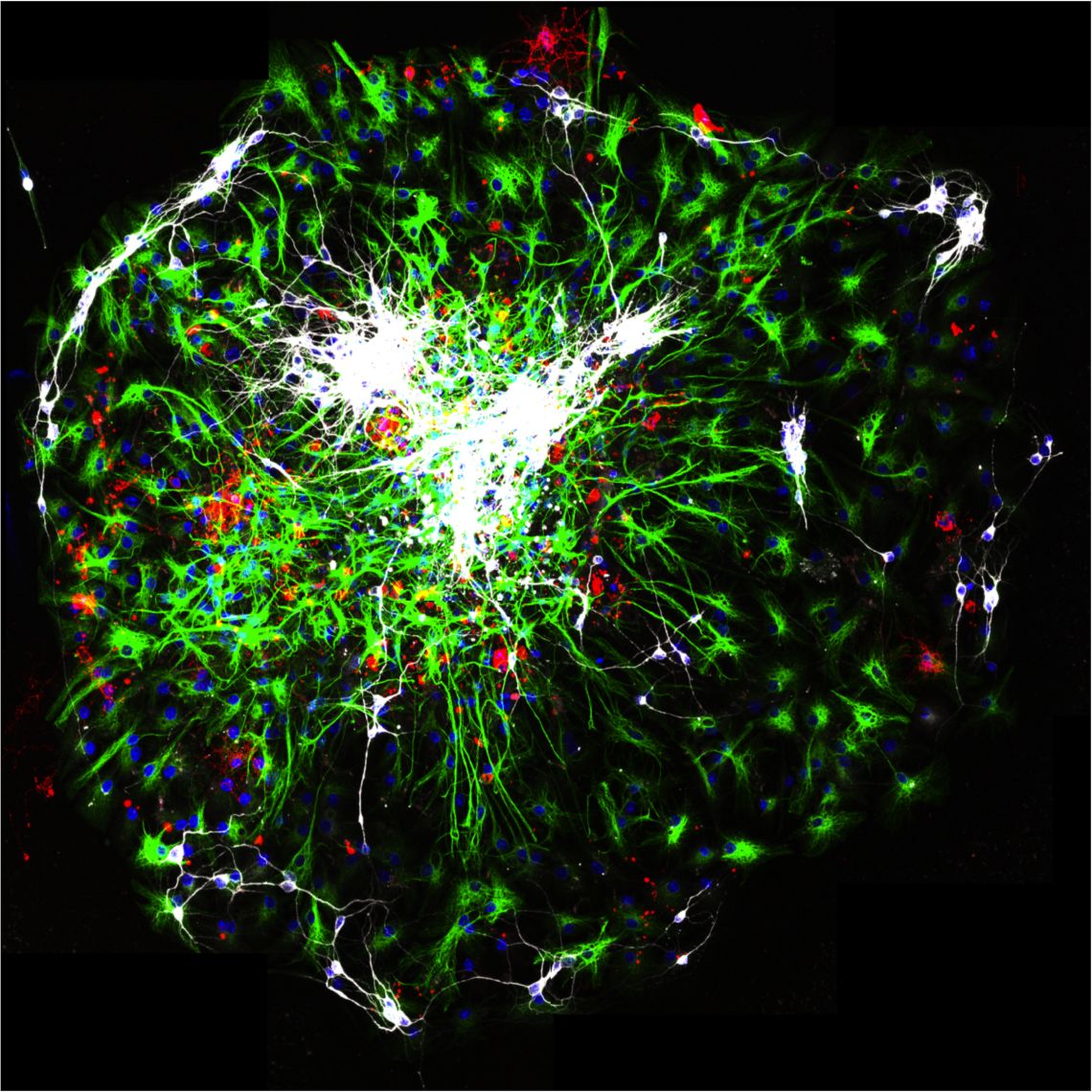
Differentiated Neurosphere
Francis Szele
Associate Professor of Developmental Biology
The main goals of my lab are to understand fundamental mechanisms governing stem cell behaviours and progenitor migration in the postnatal and adult neurogenesis. We also seek to understand how these mechanisms are altered in response to disease models and how to exogenously manipulate them to enhance repair. Finally we are studying the human subventricular zone in healthy controls and in neuropsychiatric diseases.
I graduated from the College of William and Mary in the USA with a major in Biology. I then worked for two years in the laboratory of Dennis Murphy at the National Institute of Mental Health (Bethesda, Maryland, 1985-1987) on serotonergic control of endocrine responses. I obtained my PhD (1994) working in the laboratory of Marie-Francoise Chesselet at the University of Pennsylvania (Philadelphia, USA) where I carried out one of the first studies showing increased neurogenesis after brain injury. I subsequently did a postdoctoral fellowship in Connie Cepko’s laboratory (Harvard Medical School, Boston, USA, 1994-1999). There I used a complex library of retroviral vectors to examine lineage relationships and migration patterns in the developing chick forebrain.
I established my laboratory in Chicago at Northwestern University returning to work on the subventricular zone (Assistant Professor, 1999-2007). In collaboration with Phil Hockberger my group developed 2-photon time-lapse imaging to study cell migration in the subventricular zone (please see movie below from Nam et al., 2007).
I joined Oxford University in 2007 where I am now Associate Professor and co-Head of OxStem Neuro.
Movie 10.mov
- Movie 10.mov
- QuickTime video 3.6 MB
Key publications
Expression of Idh1R132H in the murine subventricular zone stem cell niche recapitulates early gliomagenesis
Journal article
Bardella C. et al, (2016), Cancer Cell
Ependymal ciliary dysfunction and reactive astrocytosis in a reorganized subventricular zone after stroke.
Journal article
Young CC. et al, (2013), Cereb Cortex, 23, 647 - 659
Galectin-3 maintains cell motility from the subventricular zone to the olfactory bulb.
Journal article
Comte I. et al, (2011), J Cell Sci, 124, 2438 - 2447
Dynamic features of postnatal subventricular zone cell motility: a two-photon time-lapse study.
Journal article
Nam SC. et al, (2007), J Comp Neurol, 505, 190 - 208
Cortical lesions induce an increase in cell number and PSA-NCAM expression in the subventricular zone of adult rats.
Journal article
Szele FG. and Chesselet MF., (1996), J Comp Neurol, 368, 439 - 454
Recent publications
PTPRN hypermethylation-driven transcriptional repression defines a conserved regulatory axis in early- and adult-onset schizophrenia
Preprint
Cristino A. et al, (2026)
Astrocyte Enrichment of 3D Cortical Constructs Enhances Brain Repair.
Journal article
Cruz EM. et al, (2026), Adv Sci (Weinh), 13
The KAP1 chromatin regulator and Paupar long non-coding RNA control subventricular zone neural stem cell maintenance and neurogenesis.
Journal article
Alammari F. et al, (2025), Stem Cell Reports, 20
Galectin-3 induces neurodevelopmental apical-basal polarity and regulates gyrification.
Journal article
Soares LC. et al, (2025), Sci Adv, 11
Nutraceuticals: using food to enhance brain health by modulating postnatal neurogenesis in animal models and patient populations.
Journal article
Ong J. et al, (2025), Stem Cells Transl Med, 14